Driving Through Uncertainty: December 2025 FOMC Meeting
The October Federal Open Market Committee (FOMC) meeting occurred amid the unprecedented 43-day government shutdown, the longest in U.S. history. [1] Although the shutdown has ended, the absence of key economic data complicates the decision-making process for the upcoming December meeting.
Despite the lack of official data, there is no shortage of strong opinions. This article explores the contrasting viewpoints and aims to highlight the real concerns for investors.
The October Meeting
The Federal Reserve, typically united in its decision-making, has become more divided in recent months. The October meeting was no exception, with one committee member advocating for holding rates steady, while another called for more aggressive rate cuts. Additionally, the Fed made a significant decision to suspend its Quantitative Tightening program, effective December 1st, citing growing pressures in the money markets.[2]
The minutes from the meeting provide further insights. While the majority of committee members voted to reduce rates by a quarter point, bringing the target range to 3.75% – 4.00%, several members expressed a preference to maintain rates at current levels.[3] The discussion surrounding the future direction of rates revealed a widening divide within the committee.[4] The available data, though incomplete for October, helps explain this uncertainty.
What We Know
Let’s begin with employment data. Although September's job growth (+119k) may seem promising, new hires have been declining since 2022, with net job losses occurring for the first time this year in June and August.
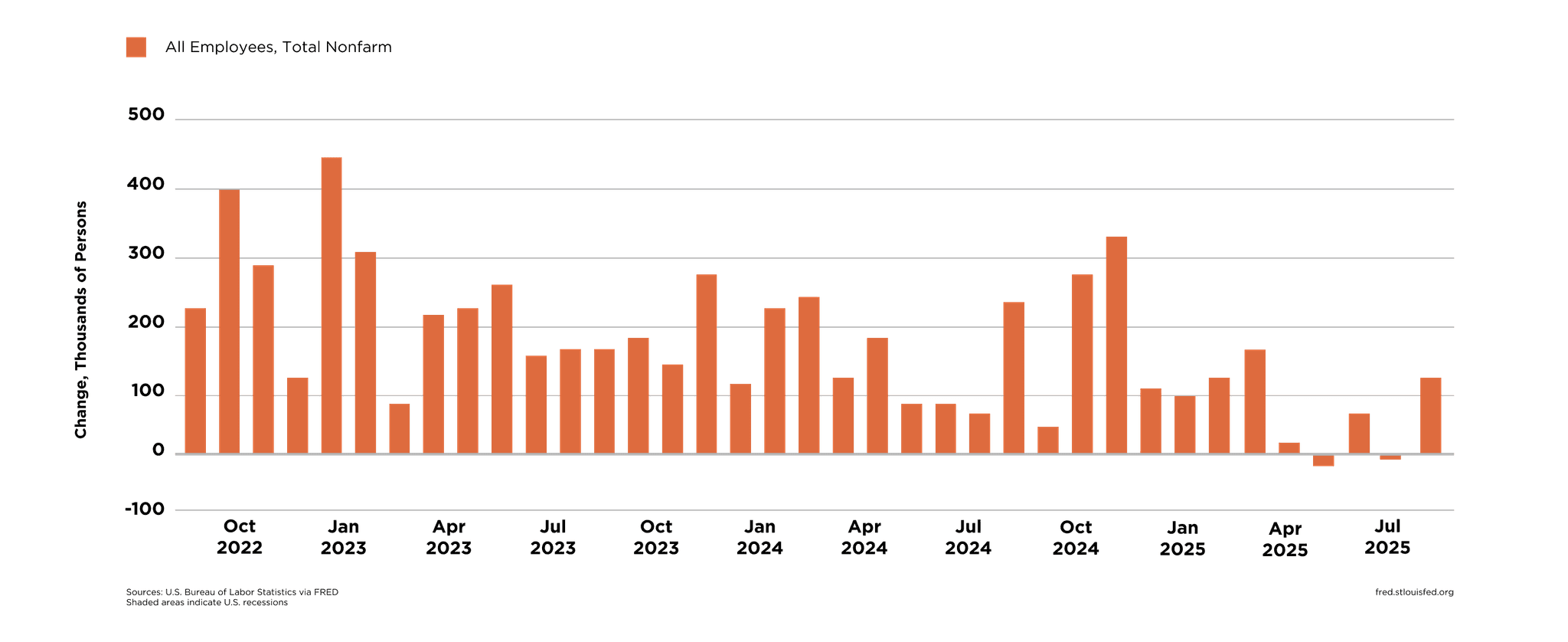
Protecting the job market is one of the Fed’s two primary mandates. Supporters of further rate cuts will argue that the declining employment figures, along with a rising unemployment rate and increasing workforce departures, indicate the need for lower rates.
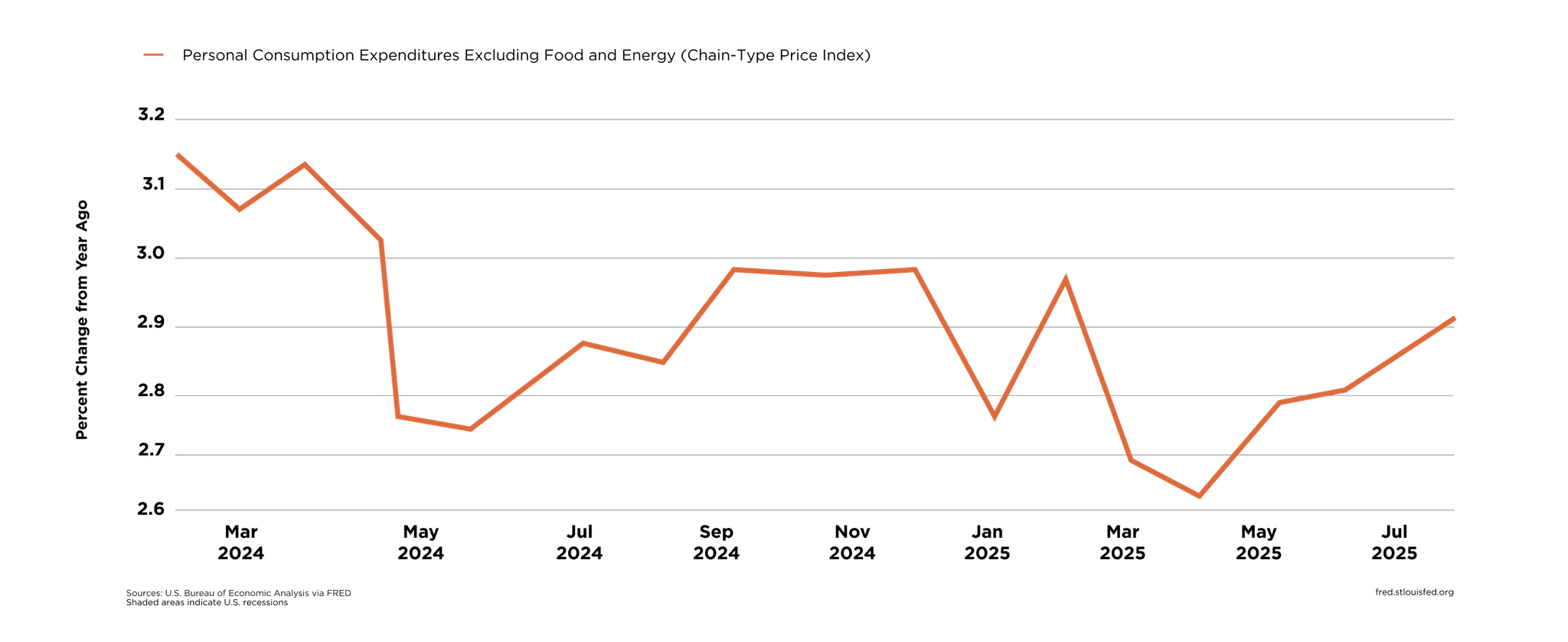
On the other hand, critics of rate cuts point to the persistence of high inflation.
Source: Federal Reserve Bank of St. Louis
Core PCE inflation, the Fed's main measure, has been rising since hitting a low of 2.6% in April. The "Nowcast" from the Federal Reserve Bank of Cleveland shows that inflation is currently around 2.9%, still almost a full percentage point above the Fed’s target.
This puts the Fed in a difficult position, with its dual mandates pulling in opposite directions. The "fog" caused by missing data means that the debate has become more a matter of conviction than concrete facts.
The Ongoing Discussion
Fed Chairman Jerome Powell initially signaled a cautious stance, indicating that a rate cut in December was not a "foregone conclusion".[5] However, subsequent remarks from other Fed officials suggest a shift in sentiment, with growing concerns about the deterioration of the labor market.
Market expectations have fluctuated significantly.[6] By the middle of the month, what was once near unanimous consensus on a December rate cut shifted to a 50:50 split, following hawkish statements from officials like Bostic[7] and Schmid[8]. But dovish comments from Waller[9] and Williams[10] have since pushed expectations of a rate cut back to around 70%.
One key argument from the dovish camp is that a significant portion of the current inflation is due to rising goods prices from tariffs, a factor beyond the Fed's control and likely to be temporary.
Conclusion
With decision-makers divided, what should investors take away from the current situation?
The key is to focus on long-term fundamentals rather than the immediate discussions surrounding rate cuts. For instance, factors such as the potential impact of artificial intelligence on labor-force productivity, helping to sustain economic growth despite a slowdown in job creation, are important considerations. Similarly, concerns about liquidity strains in the money market should be viewed in the context of broader financial stability.
Long-term trends like these are critical for achieving sustained returns, which are the ultimate goal for a serious investor. The outcome of the next FOMC meeting remains uncertain, but it is unlikely to have significant long-term implications for an investor's portfolio.
[7] Federal Reserve Bank of Atlanta